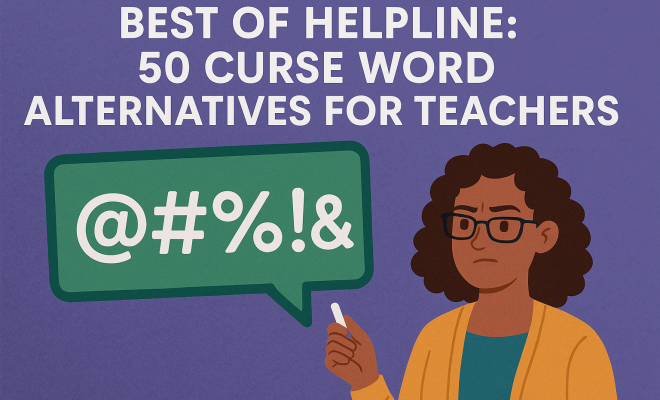
Best of HELPLINE: 50 Curse Word Alternatives for Teachers
Teaching is a rewarding yet challenging profession that often puts educators in high-pressure situations. With students testing their patience and classroom dynamics sometimes spiraling out of control, it’s easy to feel the urge to let out a curse word or two. But teachers must maintain a professional demeanor, which is where curse word alternatives for teachers come into play. This article explores 50 amusing and creative alternatives to traditional curse words, helping educators express their frustrations and humor without compromising their professionalism.
1. Aw, shucks!: A Charming Alternative
When things go wrong in the classroom, saying “Aw, shucks!” adds a dose of charm to the situation. This expression has roots in early American slang and conveys mild annoyance without crossing any lines. It’s catchy, fun, and even endearing, making it acceptable in front of students.
Using phrases like this not only helps teachers vent frustration but also fosters a positive atmosphere in the classroom, encouraging students to express their feelings in a healthy way.
2. Fiddlesticks!: A Classic Replacement
“Fiddlesticks!” is a whimsical substitute that takes the edge off more intense emotions. It’s light-hearted enough to make students giggle, and invoking such a phrase can alleviate tension in moments of classroom chaos. The word has origins dating back to the 19th century, and its playful sound can turn a sour moment into a humorous one.
Teachers can use this alternative in various contexts, from confronting a frustrating situation to dealing with minor accidents, maintaining a light-hearted tone while addressing the issue at hand.
3. Gosh Darn It!: A Family-Friendly Option
This phrase is an excellent way for teachers to express mild frustration without resorting to inappropriate language. “Gosh darn it!” is a euphemism that retains the intensity of a curse word without being offensive. It’s familiar to most students and can bridge the generation gap, making it relatable.
When faced with challenging moments, teachers saying “gosh darn it!” can teach students the importance of language choice while maintaining a positive classroom environment.
4. Rats!: Simple Yet Effective
Sometimes, a simple exclamation is all you need to convey disappointment or frustration. “Rats!” is a classic expression that can be used in countless scenarios, from dropping a stack of papers to realizing a student didn’t complete their assignment. The simplicity of this term makes it universally understood, especially among younger students.
Using this word can also prompt students to reflect on their actions in a light-hearted way, creating opportunities for dialogue about accountability and classroom behavior.
5. Curses!: A Lighthearted Twist
While this word might evoke thoughts of witchcraft and sorcery, using “curses!” as an alternative to more explicit language can be both funny and effective. Teachers can use it when minor disasters strike—like a spilled drink or a technical glitch during a presentation. The theatrical nature of the word allows educators to playfully exaggerate their frustration, lightening the mood.
This tactic not only serves as a great way to relieve stress but also encourages students to use imaginative language to express their feelings or frustrations.
6. Oh, for Pete’s sake!: A Classic Exasperation Expression
Sometimes, you need a phrase that conveys exasperation without being disrespectful. “Oh, for Pete’s sake!” fits the bill perfectly. It’s a gentle yet effective way to express frustration while maintaining an air of propriety. This phrase can become a classroom favorite, prompting students to join in with their own variations.
By using this phrase, teachers can model appropriate responses to frustrating situations and encourage students to think of their own expressions that maintain respect and humor.
7. Crikey!: An Unexpected Delight
Adopting phrases from different cultures can bring diversity and fun into the classroom. “Crikey!” is an Australian expression that conveys shock or surprise. This exclamation can be a humorous way to react to unexpected classroom events, making students laugh while also serving as a teachable moment about language variations.
Encouraging students to explore expressions from around the world can broaden their understanding of language and foster a sense of global awareness.
8. Heavens to Betsy!: A Gentle Exclamation
With its old-timey charm, “Heavens to Betsy!” is another euphemism that can take the edge off frustration. This phrase is particularly effective when something surprising happens in the classroom, such as a student revealing an unexpected talent or an unforeseen technical difficulty.
Using this phrase can also open the floor for students to share their own humorous responses to surprising situations, making it a great conversation starter.
9. Cheese and Crackers!: A Sweet Substitute
This playful phrase brings a light-hearted twist to expressing discomfort or surprise. “Cheese and crackers!” is a delightful alternative that’s sure to elicit a chuckle from students. It can be used in various situations, whether it’s a mix-up in assignments or a surprising change in schedule.
By using such cheerful language, teachers can set a positive tone even when they feel stressed, showing students how important it is to maintain composure in challenging situations.
10. What the Sam Hill?: A Curious Expression
“What the Sam Hill?” is a quirky expression that can be used to react to bewildering situations. This phrase is ideal for teachers when faced with unexpected classroom behavior or logistical challenges. Its absurdity adds an element of humor, encouraging students to explore their own quirky expressions.
By introducing this phrase, teachers can reinforce the idea that language is versatile and can be used creatively, providing students with the tools to express their feelings in a fun, engaging way.
11. Good Gravy!: A Lighthearted Reaction
Another fantastic alternative is “Good gravy!” This expression can convey astonishment or frustration and is especially effective in lighter contexts. For instance, if a student does something particularly unexpected, saying “Good gravy!” could lighten the mood and provide a teaching moment about expressing surprise.
Using playful language like this helps students understand that expressing emotions doesn’t have to be negative or aggressive, promoting a respectful classroom environment.
12. Blast!: A Strong Exclamation
“Blast!” is a classic exclamation that can effectively convey annoyance or frustration without being offensive. This word is versatile and can be used in various contexts, from minor classroom mishaps to more significant setbacks.
By using this term, teachers can demonstrate that it’s possible to express frustration while maintaining professionalism, encouraging students to think critically about their language choices.
13. For crying out loud!: An Expression of Disbelief
This phrase has a long history and is widely recognized as an expression of disbelief or frustration. Teachers can use it to lighten a frustrating moment, making it relatable and humorous for students. It captures the essence of exasperation while still adhering to a professional tone. (See: Understanding the impact of swearing.)
Using phrases like this can create a sense of camaraderie in the classroom, allowing students to see their teachers as relatable individuals who experience similar frustrations.
14. Oh, bother!: A Timeless Expression
Popularized by the beloved character Winnie the Pooh, “Oh, bother!” is a gentle expression that can soften the blow of disappointment. Teachers can use this phrase when they encounter minor setbacks in the classroom, adding a sense of whimsy to their response.
It also serves as a great opportunity to discuss literary references with students, enriching their understanding of language while keeping the atmosphere light.
15. Darn it to Heck!: A Playful Twist
This phrase is a fun twist on a common expression of frustration. It’s catchy and can even spark laughter among students, making it an effective tool for managing classroom dynamics. Using playful language can help diffuse tension and foster a more pleasant environment.
Incorporating humor into classroom interactions can promote a positive learning space and teach students how to express themselves without resorting to negativity.
16. What in the world?: An Inquiry of Surprise
Teachers can use the phrase “What in the world?” when confronted with surprising behavior or events in the classroom. This expression conveys curiosity and astonishment while keeping the tone respectful. It allows educators to acknowledge unexpected situations without resorting to inappropriate language.
This phrase also opens up discussions about behavior and expectations, encouraging students to reflect on their actions while maintaining a light-hearted atmosphere.
17. Heck!: A Mild Exclamation
The word “heck” is a mild alternative that can express a range of emotions, from surprise to frustration. Teachers can use it in various scenarios, making it a versatile addition to their vocabulary. It’s appropriate for all ages and can help maintain the professionalism teachers strive for.
Incorporating such words into everyday language can help students learn about the importance of expressing emotions appropriately while still being true to themselves.
18. Goodness Gracious!: A Cherished Expression
Another excellent alternative is “Goodness gracious!” This phrase communicates surprise, shock, or frustration in a wholesome manner. Teachers can use it when a student reveals something unexpected or when classroom dynamics take a sudden turn.
By using expressions like this, educators can reinforce the importance of language choice while also fostering a positive classroom environment.
19. Oh dear!: A Gentle Response
“Oh dear!” is a soft expression that can convey concern or mild frustration. Teachers might use it when a student forgets their homework or when a lesson doesn’t go as planned. This phrase offers a gentle reminder that it’s okay to feel disappointed without resorting to harsh language.
Using gentle expressions can help maintain a calming atmosphere, encouraging students to feel safe and supported in their learning environment.
20. Golly!: A Whimsical Exclamation
“Golly!” is a delightful alternative that captures surprise and excitement. When something unexpected happens in the classroom, this phrase can help diffuse tension and invite laughter. It’s an endearing expression that can make educators seem more relatable to their students.
Incorporating whimsical language like this can encourage students to embrace their emotions and create a fun learning environment where humor plays a significant role.
21. Shucks!: A Mild Expression of Frustration
“Shucks!” is a familiar expression that conveys disappointment or mild annoyance. It’s non-offensive and easy for students to understand. Teachers can use it when facing minor setbacks, such as a student forgetting to turn in an assignment or a lesson not going as planned.
This phrase can also serve as a teaching opportunity, allowing educators to explain the importance of using positive language when expressing frustration.
22. Good night!: A Surprised Reaction
This phrase is often used to express surprise or disbelief. When something shocking occurs in the classroom, saying “Good night!” can prompt a chuckle and lighten the mood. It’s a versatile expression that works well in many contexts. (literacy support for teachers)
By using such expressions, teachers can maintain a professional demeanor while still being relatable to their students, reinforcing the importance of language choice.
23. Mercy!: An Exclamation of Surprise
“Mercy!” is another classic expression that conveys surprise or frustration. This word is both charming and effective, allowing teachers to react to unexpected situations without using inappropriate language.
Utilizing phrases like this can also prompt students to reflect on their own language use, reinforcing the idea that there are numerous ways to express feelings appropriately.
24. Oh my stars!: A Creative Exclamation
When teachers encounter absurd situations, saying “Oh my stars!” can be a delightful reaction. This phrase can invoke a sense of wonder and surprise, making it suitable for various classroom dynamics. It’s light-hearted and captures students’ attention, often leading to laughter.
Such expressions can foster creativity and encourage students to think of their own imaginative responses to classroom situations.
25. Good Lord!: A Classic Exclamation
Though it might sound a bit formal, “Good Lord!” is an effective way to express shock or disbelief. Teachers can use it in a variety of situations, from unexpected student behavior to sudden changes in plans. Its versatility makes it a valuable addition to a teacher’s vocabulary.
This phrase allows educators to express their feelings while maintaining appropriate language standards, encouraging students to think about how they express emotions.
26. Heavens above!: A Dramatic Reaction
“Heavens above!” is another classic expression that conveys surprise or frustration. It has a theatrical flair that can engage students and shift the mood in the classroom. This phrase can transform a mundane classroom situation into a moment of levity.
By using such dramatic language, teachers can foster an enjoyable atmosphere and inspire students to express themselves creatively.
27. Whoopsie Daisy!: A Playful Alternative
“Whoopsie daisy!” is a fun and playful expression that can transform a moment of mishap into a humorous one. Teachers might use this phrase when a student spills something or makes a silly mistake. It’s light-hearted, which helps students feel more at ease when they encounter their own errors.
This expression serves as a great reminder that mistakes are a natural part of learning and can be approached with humor.
28. Good grief!: An Understanding Exclamation
“Good grief!” is a versatile expression that can effectively convey surprise, frustration, or disbelief. Teachers can employ this phrase when a particularly chaotic moment arises in the classroom, allowing them to express their emotions while maintaining a professional tone. This builds on reading comprehension tips.
Using such expressions can foster an understanding of emotional language, teaching students to articulate their feelings without resorting to inappropriate language. (See: Promoting a positive school climate.)
29. Gracious me!: A Gentle Exclamation
“Gracious me!” is a tender expression that conveys surprise or disbelief. It’s an appropriate alternative for teachers who want to maintain a gentle tone when reacting to unexpected events. This phrase is charming and can prompt smiles among students in moments of surprise.
By using such expressions, educators encourage students to explore their own language choices and express themselves respectfully.
30. Oh my goodness!: A Well-Known Exclamation
This widely recognized phrase effectively conveys surprise or shock. It’s versatile enough for various classroom scenarios, including unexpected student comments or sudden disruptions. Using “Oh my goodness!” keeps the environment light and approachable.
Teachers can leverage this expression to model how to respond to surprises in a constructive manner, encouraging students to follow suit.
31. My word!: A Traditional Expression
“My word!” is a classic expression that conveys astonishment or surprise. It’s a polite and suitable alternative for teachers looking to express their feelings without resorting to inappropriate language. This phrase can serve as an elegant way to address unexpected situations.
By using traditional expressions, educators can enrich students’ vocabulary and promote respectful communication.
32. Oh, what a pickle!: A Humorous Twist
This quirky phrase adds a humorous twist to moments of frustration. Whether there’s a scheduling mix-up or a student’s forgotten project, saying “Oh, what a pickle!” can lighten the atmosphere while still addressing the issue at hand.
This expression also opens up discussions about problem-solving, encouraging students to think critically about how to navigate challenging situations.
33. What a mess!: A Clear Expression of Discontent
In scenarios where things go awry, simply stating “What a mess!” can effectively convey frustration. This straightforward phrase captures the essence of disappointment without being offensive. It’s relatable and encourages students to acknowledge when things don’t go as planned.
Using clear language helps students understand the importance of recognizing and addressing mistakes without resorting to negativity.
34. Holy moly!: A Lighthearted Exclamation
“Holy moly!” is a playful expression that conveys surprise or astonishment. It’s an excellent alternative for teachers reacting to unexpected events, and its playful nature can create a sense of camaraderie among students.
Incorporating fun expressions can foster a positive learning environment, allowing students to feel comfortable expressing their emotions in a constructive manner.
35. My stars and garters!: A Unique Expression
This quirky and whimsical phrase is perfect for expressing shock or disbelief. It’s fun to say and can evoke laughter among students, turning a potentially tense moment into a light-hearted one. Teachers can use it in various scenarios, fostering a playful atmosphere.
By embracing unique expressions, educators can encourage students to explore language creatively while maintaining an enjoyable classroom environment.
36. Well, butter my biscuit!: A Southern Delight
This charming Southern expression conveys surprise or disbelief in a humorous way. It’s a delightful alternative to harsh language and can bring smiles to students’ faces when they hear it. This phrase can be used when students do something unexpected or when a lesson takes an unforeseen turn.
Using regional expressions like this can introduce students to the richness of language while promoting inclusivity and understanding of diverse backgrounds.
37. What the blazes?: A Colorful Expression
For teachers seeking a more colorful expression of surprise or frustration, “What the blazes?” works perfectly without crossing any lines. It’s catchy and can prompt curiosity from students, inviting them to ask about its origins and meaning.
Utilizing such expressions can stimulate discussions about language and its evolution, enriching students’ understanding of words and phrases.
38. Oh, snap!: A Trendy Exclamation
“Oh, snap!” is a trendy expression that conveys surprise or realization. It’s particularly relatable for younger students, making it an effective alternative for teachers in a contemporary classroom setting. This expression can be used when addressing unexpected student behavior or discussing surprising topics.
Incorporating trendy language can help educators connect with students, reinforcing the idea that language is ever-evolving and adaptable.
39. What’s all this then?: A British Twist
This phrase, popularized in British culture, conveys confusion or surprise. It can add a touch of humor to unexpected situations, making it relatable to students. By introducing this expression, teachers can encourage discussions about regional dialects and language diversity.
Using expressions from different cultures enriches classroom discussions and promotes inclusivity, demonstrating that language is a beautiful tapestry of diverse influences.
40. Well, I’ll be!: A Surprised Reaction
This expression conveys disbelief or astonishment. It’s a great way for teachers to respond when situations take an unexpected turn. Using this phrase can prompt students to think about their actions and how they can positively impact classroom dynamics.
Expressions like this demonstrate that educators can be surprised and even entertained by classroom events, fostering a more relatable atmosphere.
41. By golly!: A Cheerful Exclamation
“By golly!” is an upbeat expression that conveys surprise or excitement. It’s playful and can create a sense of joy in the classroom, particularly when responding to positive student behavior or surprises. This phrase encourages positive interactions and laughter, contributing to a lively classroom atmosphere. (See: Latest news on education challenges.)
Incorporating such expressions can invite students to embrace their emotions and create a lasting sense of joy in the learning environment.
42. What in tarnation?: A Colorful Alternative
This colorful phrase conveys astonishment or confusion. It’s perfect for teachers who want to express disbelief in a humorous way. Students will likely find the phrase amusing, adding a light-hearted touch to classroom interactions.
Using such creative expressions fosters a sense of community, as students learn to appreciate the diverse ways people express feelings and emotions.
43. Ah, nuts!: A Simple Expression
“Ah, nuts!” is a straightforward and mild expression of frustration. It’s easily understood by students and can be used in various situations, like when a lesson plan goes awry or a student misplaces their homework. This phrase encourages students to share their own reactions in a fun, relatable way.
Using simple expressions allows teachers to model positive language choices, reinforcing the importance of expressing feelings appropriately.
44. Whew!: A Sigh of Relief
Sometimes, teachers just need to express relief after a stressful moment. Saying “Whew!” can convey a sense of lightheartedness after a challenging situation. This expression is universally understood and can even prompt laughter among students.
Using light expressions like this can foster an environment where students feel comfortable acknowledging their emotions, leading to a more supportive classroom.
45. My goodness!: A Gentle Reaction
“My goodness!” is a gentle way to express surprise or disbelief. It’s appropriate for various situations and maintains a professional tone while conveying emotions. This phrase can help educators navigate challenging moments in the classroom without jeopardizing their professionalism.
By utilizing expressions like this, teachers can reinforce the importance of language choice in communicating feelings effectively.
46. For Pete’s sake!: A Familiar Exclamation
This phrase has become a staple among teachers, as it conveys frustration without being offensive. It’s relatable for students and can be used in various contexts, making it a versatile addition to a teacher’s vocabulary.
Incorporating such phrases helps educators model appropriate language use, encouraging students to express themselves while maintaining respect.
47. What the heck?: A Mild Response
“What the heck?” is a common expression used to convey confusion or disbelief. It’s mild enough for the classroom setting while still capturing the essence of frustration. Teachers can use this phrase to address unexpected situations or student behavior.
Utilizing such language invites students to engage in discussions about their feelings and promotes a respectful classroom environment.
48. Hoo boy!: A Fun Exclamation
“Hoo boy!” is an upbeat expression that conveys surprise or exasperation. It’s perfect for teachers reacting to chaotic classroom moments. This phrase is energetic and can draw laughter from the students, lightening the atmosphere.
Incorporating fun expressions into classroom interactions helps foster a positive environment where students feel comfortable sharing their emotions.
49. Oh my!: A Classic Reaction
“Oh my!” is a classic phrase that conveys surprise or disbelief. It’s appropriate for various situations and can help teachers manage their reactions in a professional manner. Students will relate to this expression and can use it in their own conversations.
Using expressions like this encourages students to think about the impact of their words and how they can express themselves in a respectful way.
50. What a relief!: A Positive Exclamation
When stressful situations resolve, saying “What a relief!” can capture the feeling perfectly. This expression conveys joy and can foster a sense of shared success in the classroom. It encourages students to celebrate achievements and convey their feelings positively.
By using uplifting language, teachers can help students understand the value of expressing joy while navigating the challenges of learning together.
In conclusion, maintaining a professional demeanor is crucial for teachers, but it doesn’t mean they can’t use humor and creativity to communicate their feelings. These curse word alternatives for teachers offer a wealth of options to express frustration or disbelief in a light-hearted manner, fostering a more positive classroom atmosphere. By adopting these playful expressions, educators can not only maintain their professionalism but also connect with their students on a more personal level, creating an environment where everyone feels comfortable expressing themselves.
Trending Now
Frequently Asked Questions
What are some alternatives to curse words for teachers?
Teachers can use creative phrases like 'Aw, shucks!', 'Fiddlesticks!', and 'Gosh darn it!' as light-hearted alternatives to express frustration. These expressions help maintain professionalism while allowing educators to vent their feelings in a humorous way.
Why should teachers avoid using curse words in the classroom?
Teachers should avoid curse words to maintain a professional demeanor and create a positive classroom environment. Using appropriate alternatives helps foster respect and encourages students to express their frustrations in a healthy manner.
How can teachers express frustration without cursing?
Teachers can express frustration by using amusing alternatives like 'Oh, for Pete's sake!' or 'Goodness gracious!' These phrases convey feelings without being offensive, helping to lighten the mood and keep the classroom atmosphere positive.
Are there funny alternatives to curse words for kids?
Yes, phrases like 'Fiddlesticks!' and 'Gosh darn it!' are funny alternatives that kids can relate to. These expressions are playful and can help diffuse tense situations while being appropriate for a school setting.
What is the benefit of using euphemisms in teaching?
Using euphemisms allows teachers to express their emotions without resorting to inappropriate language. This practice promotes a respectful classroom culture and encourages students to communicate their feelings in a constructive way.
What did we miss? Let us know in the comments and join the conversation.