
Usually refers to grades one to six, but there are variations and configurations. Elementary school classes are typically self-contained classes with one teacher for all subjects. Students may be team-taught by two teachers, and some districts departmentalize their upper elementary grades. Fourth grade may seem more difficult than third grade


Typically covers grades 9 to 12. High school courses carry Carnegie Units (CUs), and students are required to accumulate a prescribed number before they are allowed to graduate. A CU is a measure of the amount of time a student studies within a course. Most courses carry 1 CU. Some

A model where the curriculum is divided into subject areas, and there is little flexibility for cross-curricular activity. Subjects are siloed. Emphasis is placed on acquisition, memorization, and knowledge of each specific content area. Within this curriculum structure, strong emphasis is placed on instruction, teacher-to-student explanation, and direct strategies. Direct
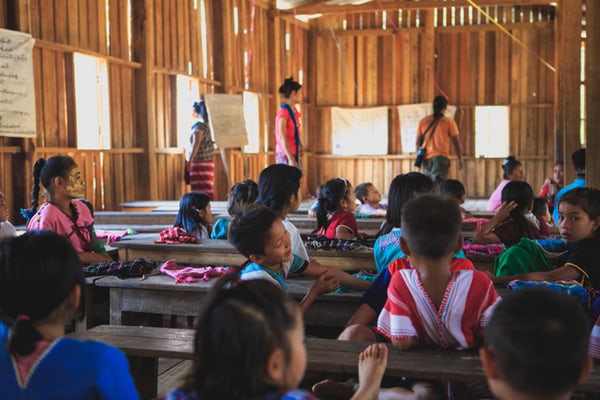
Is a nonauthoritative, participation-focused curriculum model. In this curriculum structure, students have opportunities and increased responsibility to identify their own learning needs: to find, choose, and incorporate resources, and to construct their own knowledge based on their needs and interests. The student-centered curriculum encourages students to find their passions and

This classroom management/discipline approach centers around four types of punishment/reinforcement: Positive reinforcement: Giving extra credit for a question answered with much thought Positive punishment: A meeting with the principal Negative reinforcement: Removal from list of students who have to answer questions Negative punishment: Decrease in free time

This classroom management approach is often used due to its easy implementation. Unlike the self-discipline, where students are responsible, the desist approach makes teachers the responsible party. This approach can be viewed as a power system, because teachers have the power, and they set the specific rules to give students

In a 1979 study, Frederick Jones found that nearly 50% of teaching time was wasted due to children’s misbehavior, of which approximately 80% was spent talking in class. Jones suggested that teachers could work on not losing the valuable time by implementing the following techniques: set limits, effective body language,

Provides the opportunity for individuals to become teachers without a formal background in education. These routes may be of value to individuals who have not completed a formal teacher-training program at an accredited university or college but would like to be trained as a teacher. They are particularly well suited

Is the shorthand for the “Professional Assessments for Beginning Teachers.” These assessments come in the form of a series of tests – an unsurprising thing to find in the field of education. Whether you are considering a traditional teacher education program or an alternate-route program, it’s important to understand the

The most extensive and in-depth field experience is student teaching. You are required to perform this exercise to obtain your teaching degree. Typically lasting from at least five weeks to 2 semesters, student teaching places you for an extended period shadowing the same mentoring teacher, with a consistent daily schedule,